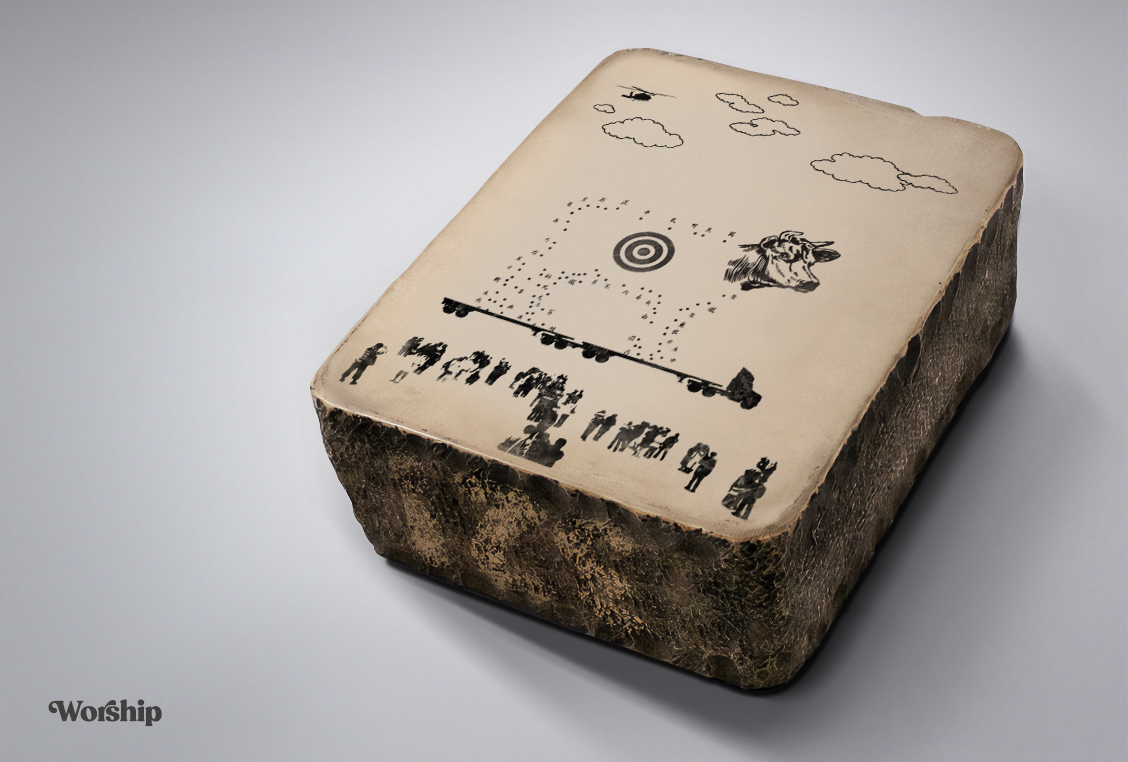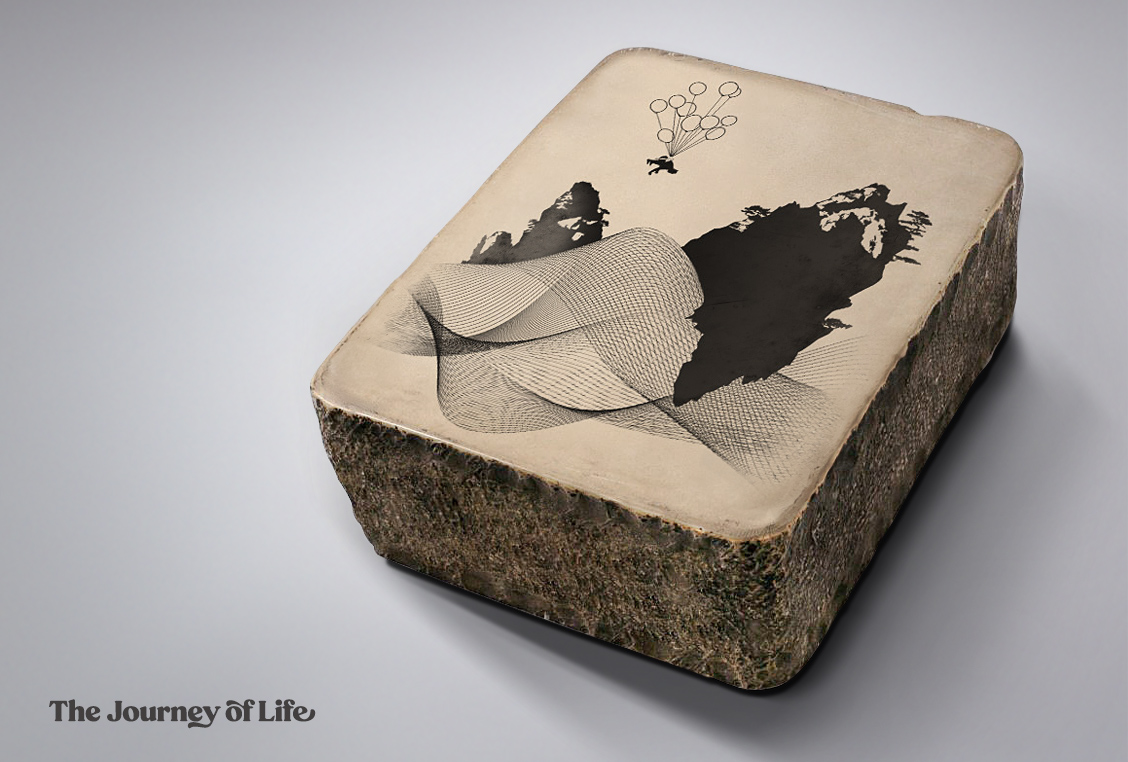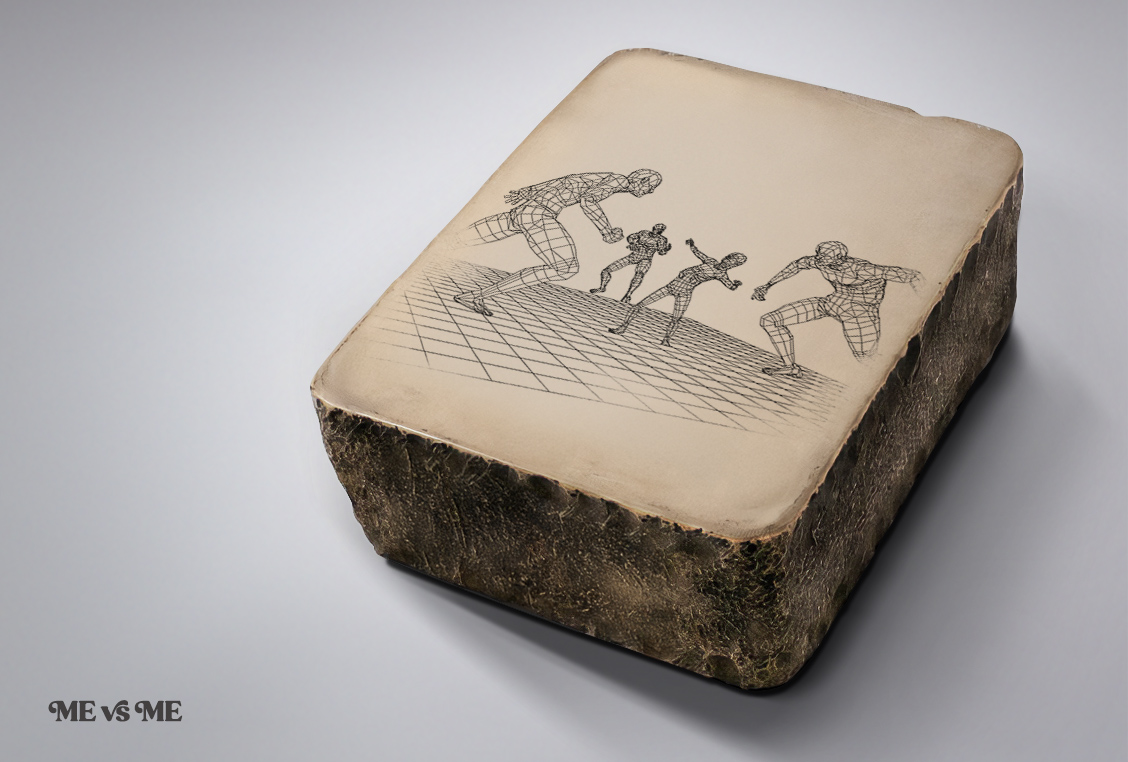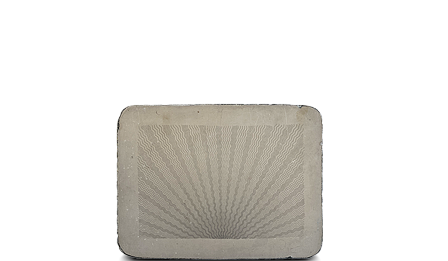

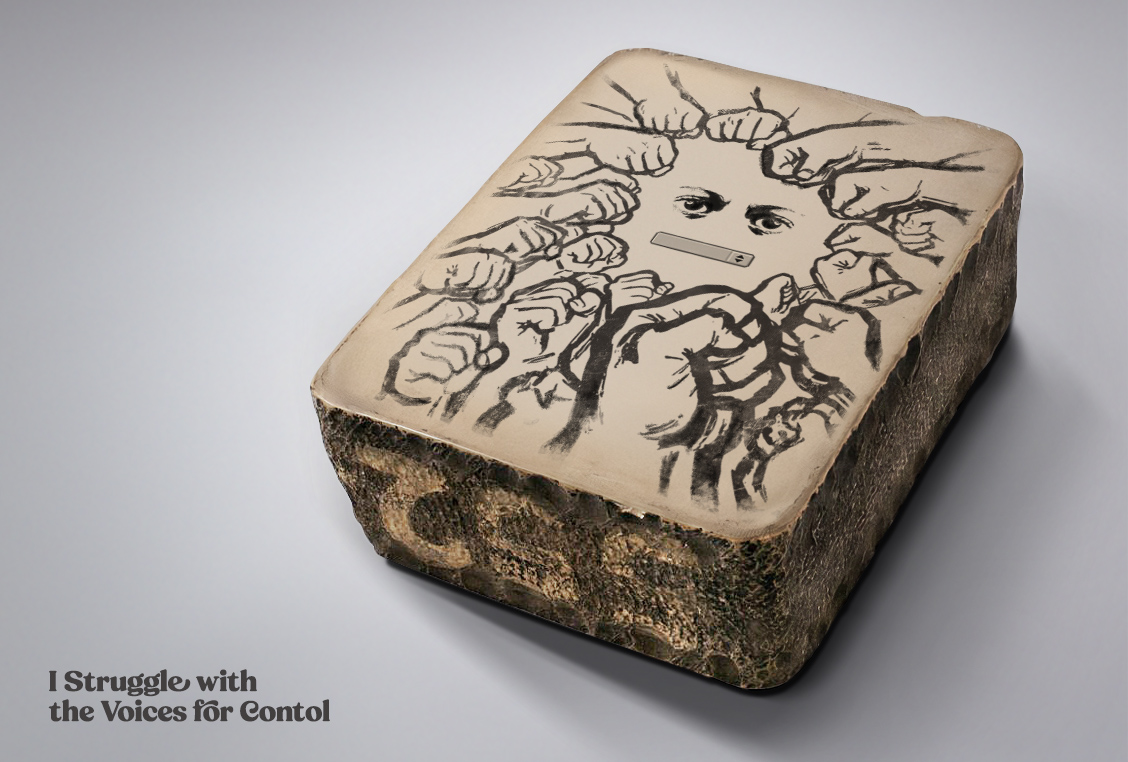
These pieces look like vintage lithography stones—until you pick one up. A real limestone stone this size would be a back-throwing commitment. Mine are hollow, slip-cast ceramic, so they carry all the surface, edge, and history… without the weight. The best part is the reaction: people brace for “heavy,” then do a double-take when it’s basically nothing. Hanging them on the wall only makes it worse (in the best way).
This series came out of a larger shift I was part of—pushing imagery on clay beyond “decoration” and into concept, emotion, and meaning. Galleries love neat categories: painting, photo, print, sculpture. My work didn’t behave. I never really saw myself as just a ceramic artist anyway. If anything, I’ve always been a printmaker who happens to speak fluent clay.
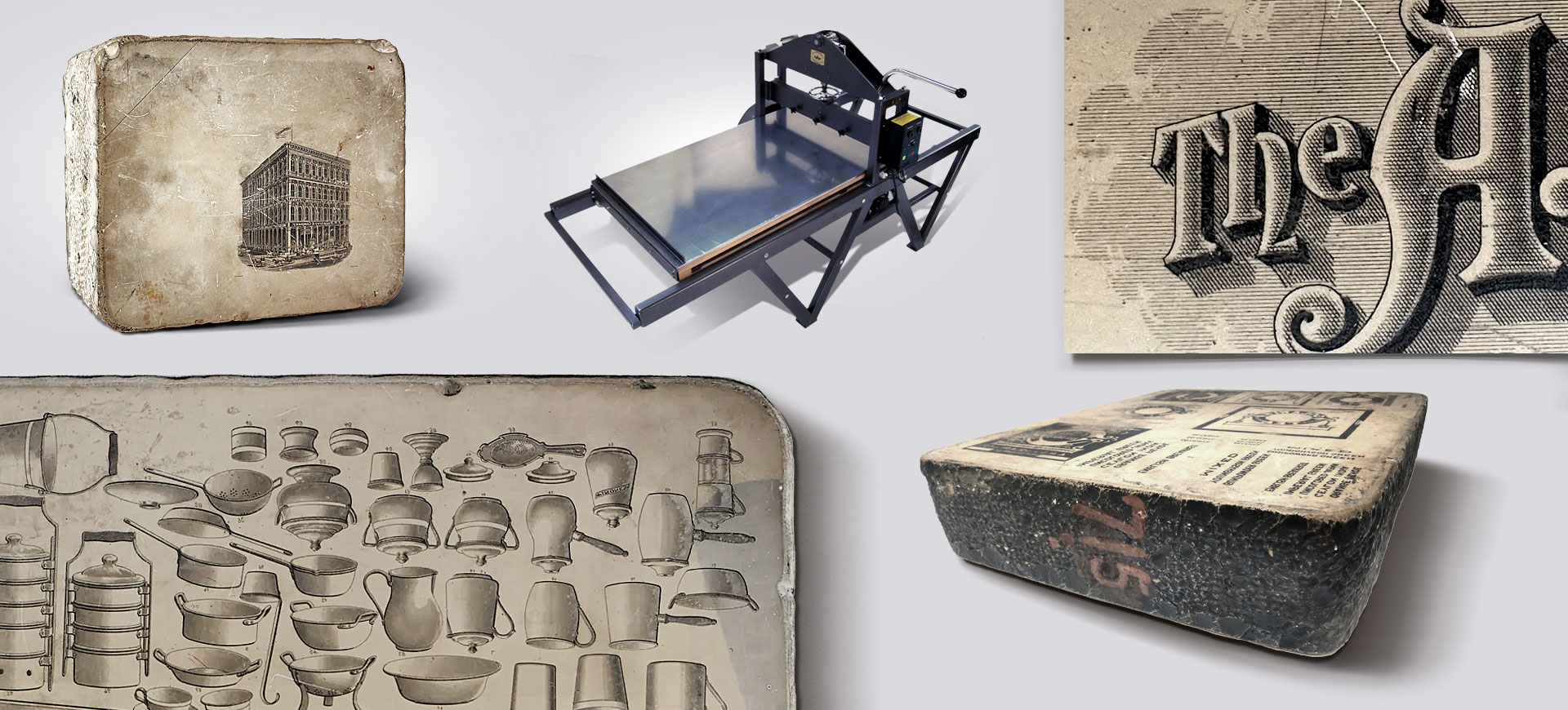
So when I decided to make work for a National Print Exhibition, I leaned all the way in. I tracked down real litho stones, made molds from them, then printed my own imagery onto the ceramic surfaces to mimic the look of an inked-up stone ready to run. I even built in the patina—those scars and stains that come from being used. It’s a tribute to printmaking… and a small, ceramic scam on your expectations.
A Legacy Etched
A litho stone is a flat slab of fine-grained limestone used in lithography, a printmaking process invented in the late 1700s. Artists draw directly on the stone with a greasy medium, then a chemical process locks the image in—so ink sticks to the drawn areas and rejects everything else. Run it through a press, and you get prints with ridiculous detail.
Think of it as the printmaker’s original canvas—heavy, stubborn, and wildly expressive. Mine just happen to be ceramic.